01
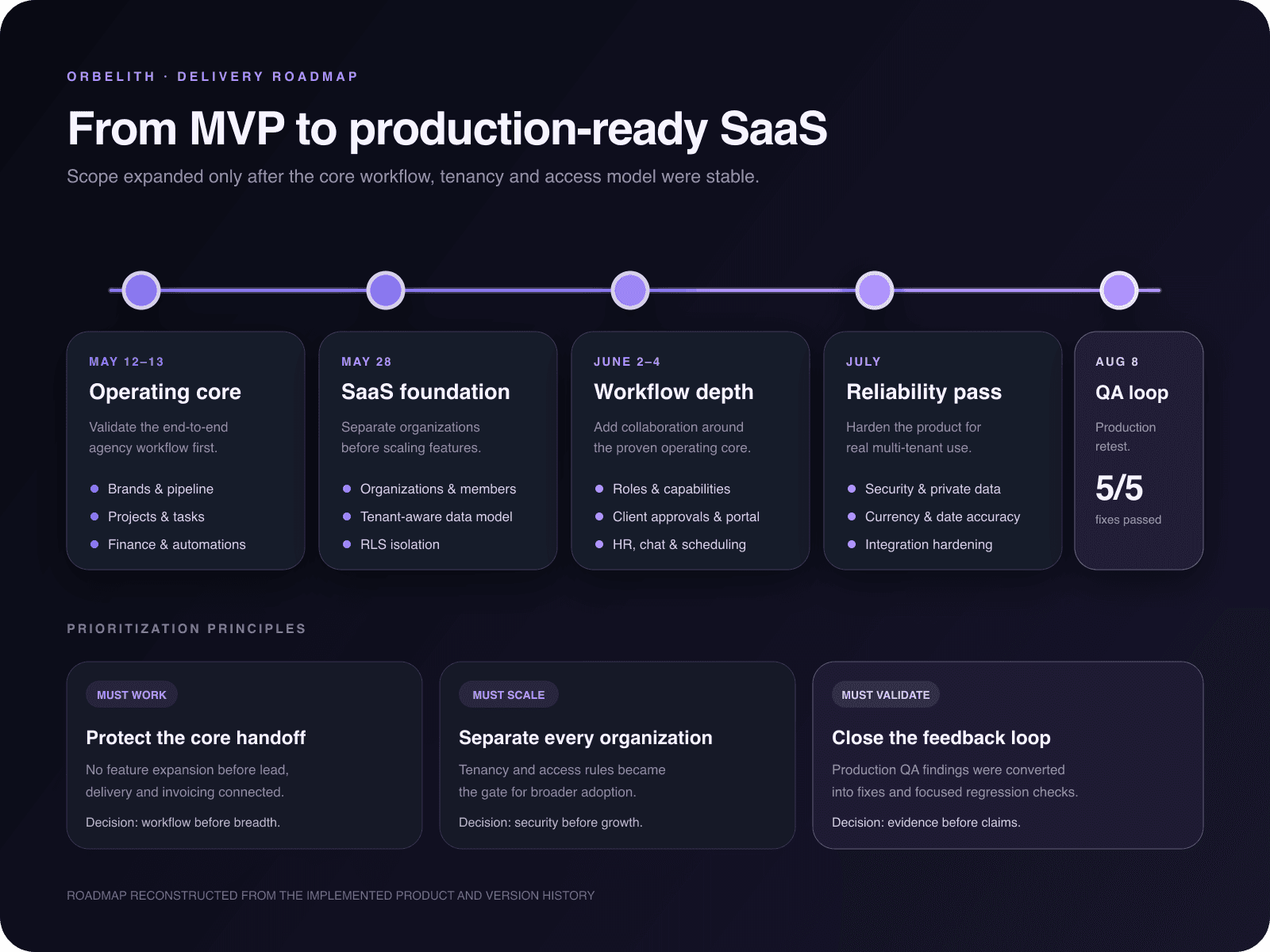
Operating core
Brands and pipeline, projects and tasks, finance and invoicing, basic automations and notifications.
 OrbelithExplore the product
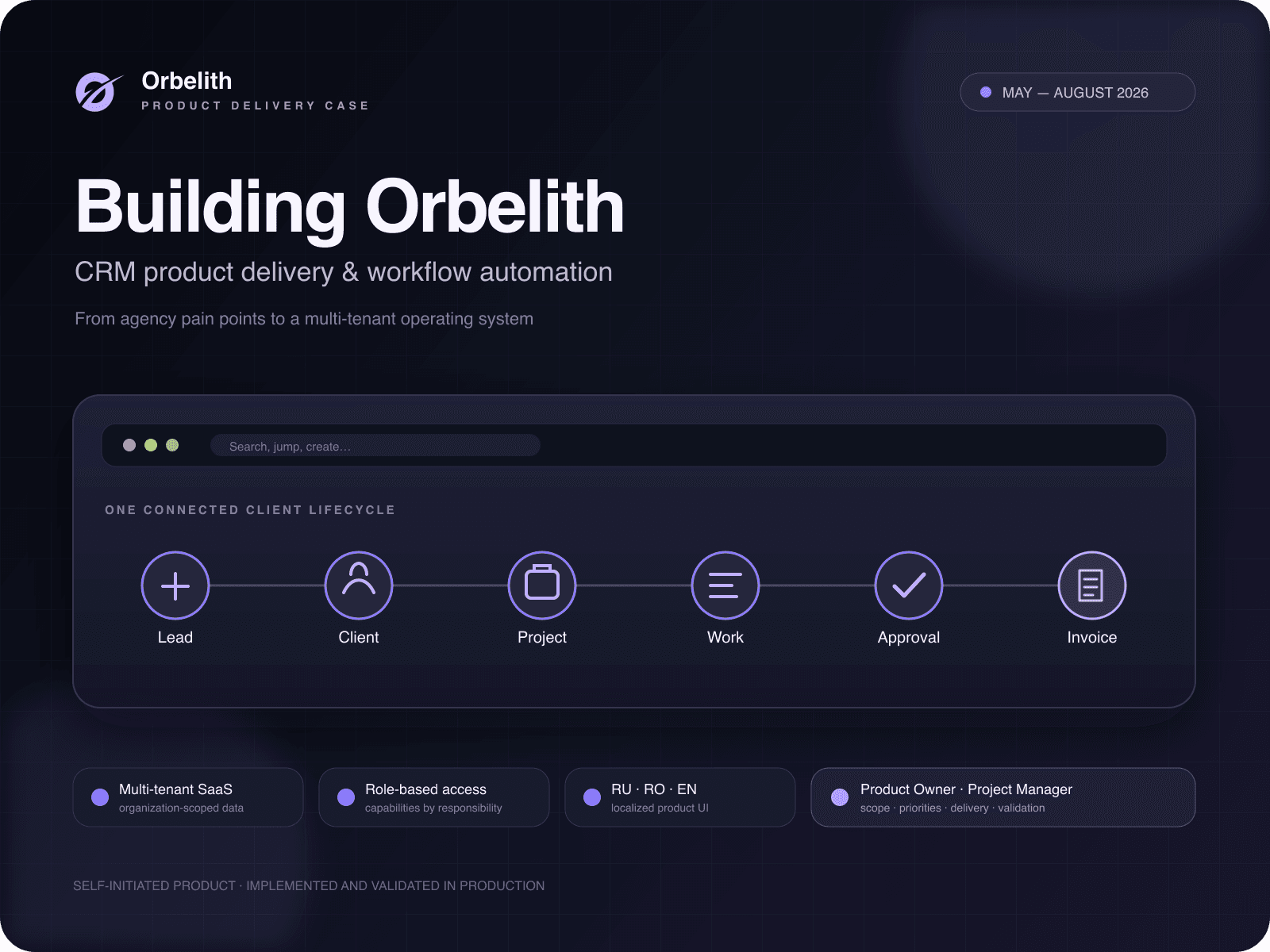
CRM product delivery and workflow automation — from agency pain points to a connected, multi-tenant operating system.
01 — Overview
Orbelith is a multi-tenant CRM and operations platform for marketing agencies. It connects client acquisition, project delivery, approvals, finance, team operations, reporting, and scheduled automations.
Ownership
This is a self-initiated product owned by the author. The case documents direct product ownership without claiming an external client or a large delivery team.
Responsibilities demonstrated
02 — Product problem
A marketing agency often manages the same client across a sales pipeline, task board, content approvals, inboxes, spreadsheets, finance records, HR tools, and reporting templates.
The challenge was not simply to add more modules. It was to make each module support a shared client lifecycle so that context survives every handoff.
The product also had to preserve organization-level access boundaries while remaining usable across roles, currencies, and three interface languages.
Product objective
03 — Scope and prioritization
The roadmap was organized around product gates: connect the essential lifecycle first, establish tenant safety, then deepen collaboration and harden production behavior.
Brands and pipeline, projects and tasks, finance and invoicing, basic automations and notifications.
Organizations and memberships, tenant-aware data, row-level isolation, and public agency signup.
Capability-based access, approvals, client portal, team collaboration, HR, workload, and scheduling.
Integration hardening, private documents, currency and date correctness, production QA, fixes, and retesting.
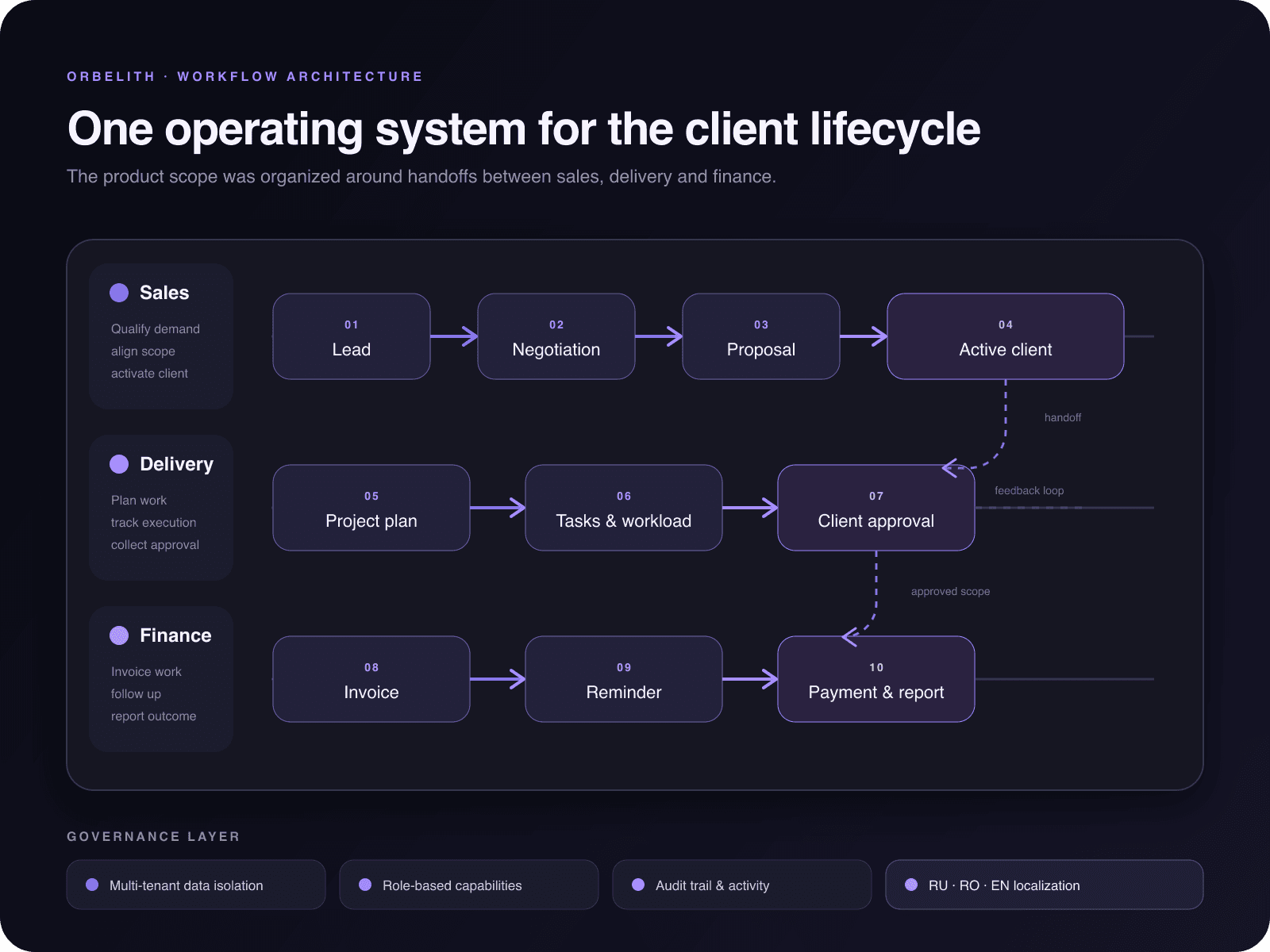
04 — Workflow design
Sales creates the context for delivery; delivery approval creates the context for finance; reporting closes the loop with the client.
05 — Delivery roadmap
Each phase unlocked the next one only after its core product risk was addressed.
06 — Product evidence
The delivered product includes pipeline, projects, tasks, approvals, workload, inbox, finance, reports, HR, scheduling, profitability, settings, and audit surfaces.
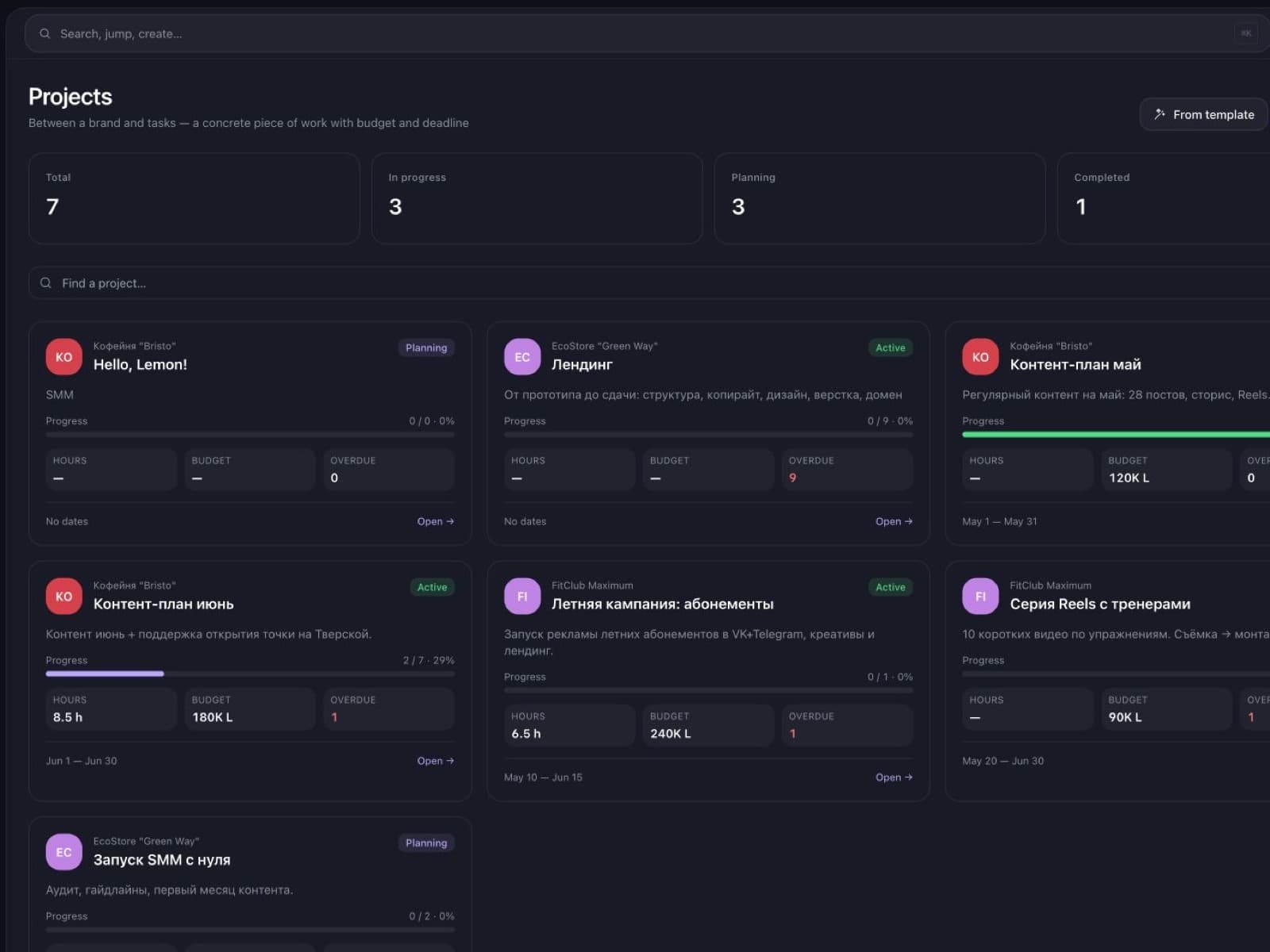
Status, progress, budget, tracked hours, and overdue work in one operational view.
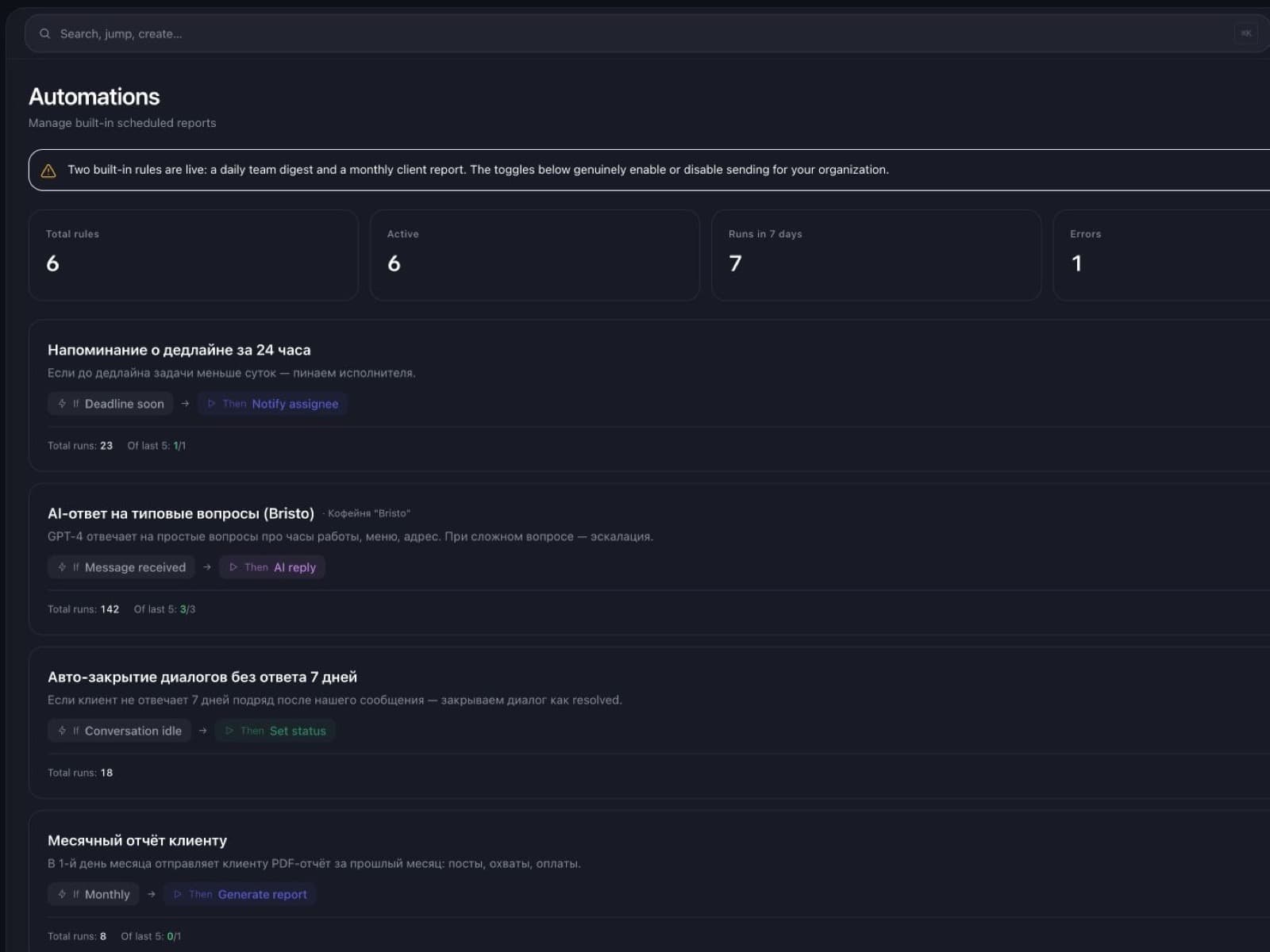
Six active rules with execution state, failure visibility, and organization-scoped behavior.
07 — Key decisions
The lead-to-invoice journey had to connect before expanding the module set.
Organization isolation and access capabilities became gates for broader SaaS use.
Production findings were converted into fixes and focused regression checks.
08 — Outcome
The result is measured through delivered product behavior and verified implementation — not unsupported revenue, adoption, or team-size claims.